
#004. The Amazon Shutdown That Changed Everything!
Hi – it’s Rebecca.
I still remember where I was.
We were having lunch in a ski resort in France. The waiter was making his way around the table taking orders and, almost absent-mindedly, I checked my Amazon stats on my phone.
At first, I thought it was a glitch. The numbers looked wrong.
I refreshed. Then refreshed again. My family started looking at me.
“What’s wrong?”
I wasn’t listening. I stood up, walked outside the restaurant and refreshed again.
Zero.
A message appeared on the screen:
“Your store has been closed by Amazon. Please contact customer support.”
I remember standing there staring at my phone, convinced there had to be some mistake. Eight months earlier, I’d started with nothing.
Now revenue was approaching $35,000 a month. Rankings that had taken months to build were finally gaining momentum, and for the first time it genuinely felt like all the hard work was starting to pay off.
Then, in the space of a few seconds, it was gone.
Not down. Not slower.
Gone.
Revenue went from booming to zero overnight.
I spent the rest of the afternoon trying to call Amazon from France. The connection was terrible and I could barely hear the person on the other end.
Eventually I reached someone in California who told me they’d investigate and get back to me.
They never did.
A short time later an email arrived The shutdown had been a mistake. The account was reinstated. Problem solved.
Except it wasn’t.
The rankings weren’t reinstated. The momentum wasn’t reinstated. The visibility wasn’t reinstated.
Products that had been ranking around 2,000 were now buried closer to 200,000.
The account was back.
The business wasn’t.
Looking back, losing the revenue wasn’t the biggest lesson.
The biggest lesson was what the shutdown revealed.
For eight months, I thought I was building a business.
Revenue was growing. Customers were buying. Reviews were coming in. Every metric I cared about seemed to be moving in the right direction.
The business looked healthy. The problem was that I had confused activity with ownership. At the time, I couldn’t see it.
Why would I?
Money was arriving. Orders were flowing. The numbers suggested everything was working exactly as it should. But underneath all that growth sat a dependency I didn’t fully understand.
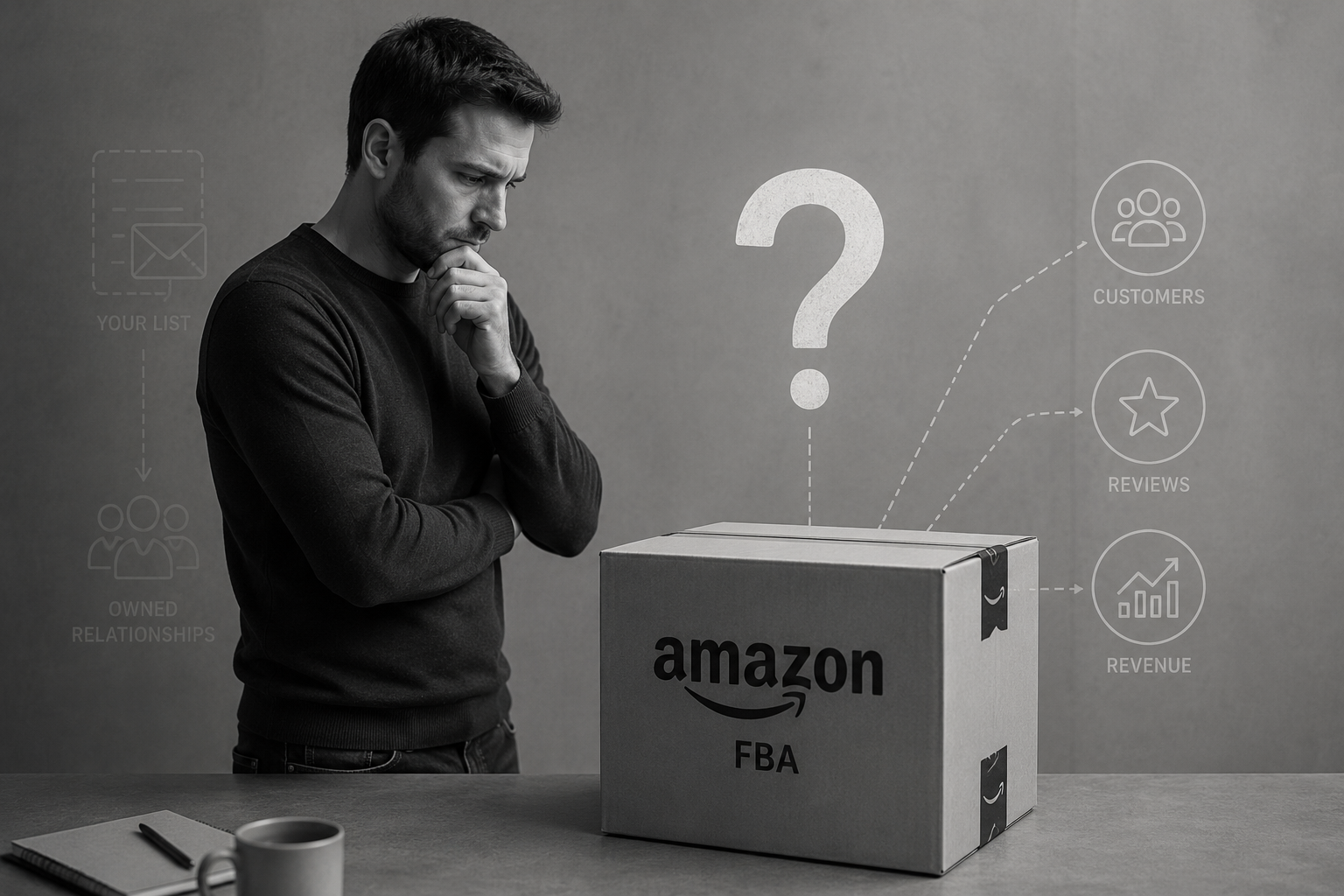
The customers weren’t really mine. The platform wasn’t mine. The relationship wasn’t mine.
Amazon simply allowed me access to them. And one morning, they took that access away. That’s when I realised something I had completely missed.
I wasn’t pouring water into a leaking bucket.
I was pouring water into somebody else’s bucket.
The strange thing about borrowed buckets is that they look exactly like your own while things are going well.
The revenue lands in your bank account. Customers leave reviews. Orders arrive. Everything feels real.
Because it is real.
Until somebody changes the rules.
Then you discover the difference between using an asset and owning one.
That day changed how I viewed ecommerce forever.
I stopped thinking purely about sales and started thinking about ownership.
I stopped asking:
“How do I get more customers?”
And started asking:
“What do I actually own?”
Because revenue is important. Growth is important. But ownership is what remains when things go wrong.
A Question Worth Considering
If the platform you rely on most disappeared tomorrow, what would remain?
Would you still have a business?
Or would you simply have access removed?
The answer may tell you whether you own the bucket.
This Week’s Leak
For years, I thought I was building a business.
Amazon taught me something different Revenue is not ownership. Traffic is not ownership. Access is not ownership.
The most dangerous dependency in business is often the one you don’t realise you have. Because leaks can be fixed.
But first, you need to make sure the bucket is yours!
What do you think? 🙂
Reply and let me know if this resonated.
Until next Saturday,
Rebecca
Other Leaks You Might Have Missed…
#005. AI Won’t Fix A Weak Offer
#002. The Validation Trap: The Assumption I Didn’t Know I Was Making
#001. The Winning Product Myth: The First Leak Most Founders Miss!