
#011. The Ecommerce Relationship Nobody Talks About
Posted on Saturday – 27/06/2026 – Reading Time: 5 minutes
Hi – it’s Rebecca.
When you start an ecommerce store, you probably think it’s all about the product…
- Finding the winning product
- Building the website
- Running ads
- Growing revenue
Very few think about finding the best suppliers.
I think that’s a mistake.
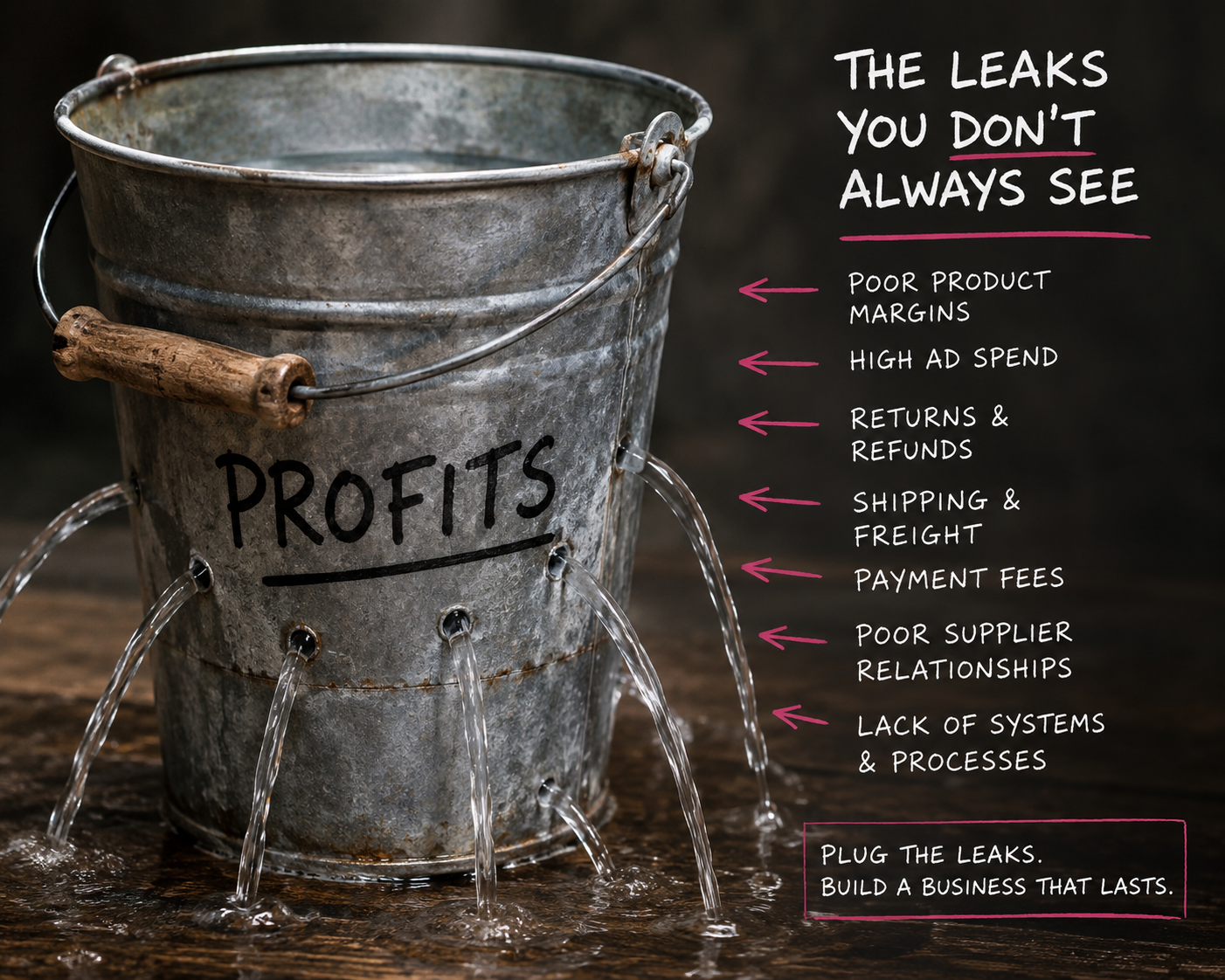
Looking back over nearly 13 years in ecommerce, I now see supplier relationships as one of the most overlooked competitive advantages in the business – and one of the biggest leaks.
Many founders find a supplier on Alibaba or AliExpress, send a message, receive a quotation and accept it without question. They go for the cheapest price.
From that point, the relationship often becomes purely transactional. Expectations are never discussed, quality is assumed, and communication only happens when something goes wrong.
I have never approached it that way.
To me, the supplier isn’t simply someone selling me a product. They were part of my business.
Negotiation Starts Earlier Than You Think
Negotiation isn’t about arguing over every last cent. It’s about understanding the numbers.
When I launched my tea business, after negotiating the tea itself – I was negotiating the custom packaging quote.
The first quotation I received for the tea pouches was around $0.60 per bag (packet). After asking questions, discussing volumes and building the relationship, that price came down to around $0.30.
Saving thirty cents doesn’t sound exciting – until you’re ordering 2,000 pouches.
That’s around $600 saved before selling a single packet of tea!
Small negotiations often become large advantages, especially once you scale.
Read Every Quotation
One habit I developed was checking every quotation carefully.
I check:
- Unit price
- Quantities
- Shipping
- Packaging costs
- Totals
- The maths
More than once I find calculations that do not add up.
Sometimes it is a genuine mistake. Sometimes a figure has been entered incorrectly…
I’d reply politely:
“There seems to be an error in the calculation. Could you please check the quotation again?”
That’s not being awkward. That’s running a business.
Never assume the quotation is automatically correct. In fact on first quote rounds I’ve had, it rarely is accurate.
Sometimes I felt suppliers were trying to work out what sort of buyer I was. Did I read the quotation? Did I understand the numbers? Would I simply accept the first price?
And if it is still coming back with errors, have back up suppliers! Never rely on one supplier. If you do that you could lose your business overnight, like I did.
My silk scarves business was reliant on a fantastic supplier – the only one with images (before ai era) I could use and highest quality, fast shipping with packaging…However, they shut down over Covid and said they were not restocking.
I always prefer having at least three potential suppliers now for the same product. If one disappears overnight, my business does not disappear with it.
Vet Suppliers Before You Commit
Another leak is relying on the first supplier you find.
Where possible, I prefer speaking with several suppliers – not just to compare price, but to compare responses.
I pay attention to:
- How quickly they reply
- Whether they answer questions properly
- Whether they understand the product
- How transparent they are
- Whether they could customise packaging
- How they handle processing and shipping and shipping times
Buying Samples
It’s easy to read reviews on Amazon, AliExpress, Temu or a factory website and assume the product is high quality.
Don’t.
One of the biggest mistakes you can make is skipping the sampling process. More than once I’ve ordered samples that looked excellent online, only to discover the quality was poor, the finish was disappointing or the product simply fell apart.
At that point, it doesn’t matter how good your offer might be. If the product isn’t good enough, it’s a no-go.
Whenever possible, buy samples from multiple suppliers. You may be surprised how much quality can vary between factories producing what appears to be the same product.
Sampling isn’t just about testing the product.
It’s one of the most important ways to vet the supplier you’ll eventually trust with your business.
Vetting Never Stops
One mistake is thinking supplier vetting ends once you’ve placed your first order.
It doesn’t.
The relationship continues long after your product goes live.
Pay attention to customer feedback. Watch your return rates. Monitor defects and packaging issues. Keep asking questions. The best suppliers welcome feedback because they want to improve alongside you.
As your business grows, you can also introduce additional quality control. Many larger sellers hire independent inspection companies in China to check products before they leave the factory. It’s an extra investment, but once you’ve validated your product and you’re ordering larger volumes, it can save you far more than it costs.
Great founders don’t stop vetting suppliers. They keep raising the standard!
Price matters. Reliability matters more…
Ask Better Questions
The product listing rarely tells you what you really need to know.
So I ask questions – lots of them.
- How is quality controlled?
- What happens when defects occur?
- What percentage of products fail inspection?
- Can production increase if demand suddenly doubles?
- What packaging options are available?
- What is your monthly production capacity for this product?
That last question is often overlooked.
If your product suddenly takes off, can your factory actually keep up with demand? If they can’t, you risk running out of stock, losing sales and damaging your rankings. It’s one of those operational questions that rarely gets asked until it’s too late.
Stock control, inventory management and cash flow are all closely connected – but they’re topics for another newsletter.
The answers often told me more about the efficiency of the factory than the catalogue ever could.
Relationships Compound
In the beginning, suppliers are often trying to work out what sort of buyer I am…
- Did I understand my numbers?
- Did I read quotations carefully?
- Did I ask intelligent questions?
- Was I building a real business or placing occasional orders?
As my orders grew and the relationship developed, mutual trust became easier.
Eventually I became a VIP customer with one of the factories I worked with.
Not because I demand the cheapest price – but because I treat the relationship professionally and got them sales :).
- I communicated clearly
- I paid on time
- I understood their business as well as my own
By that point, we both wanted the same thing: for my business to grow – because when my business grew, so did theirs.
Founder Thinking
Transactional founders see suppliers as vendors. Long‑term founders build business relationships.
One mindset creates friction. The other creates trust, better communication and opportunities that never appear in a product listing.
“Sometimes your competitive advantage isn’t another product. Sometimes it’s the conversation you had long before your first customer ever arrived.”
The stronger the relationship, the stronger the foundation you’re building your business on.
This Week’s Leak
It’s easy to think supplier relationships begin when you place your first order (leak).
In reality, they begin with the very first conversation.
The questions you ask, the quotations you challenge, the standards you expect and the professionalism you bring to the relationship all shape the outcome. The strongest supplier relationships are built on mutual respect, not simply on finding the lowest price.
Building a profitable ecommerce business isn’t only about choosing the right product. It’s about building the right relationships with the people who help bring that product to your customer.
Have you negotiated with suppliers and found a better deal? Would love to hear your story or POV in comments…
IF you are a supplier, how do you find us merchants to work with – POV?
Until next Saturday,
Rebecca
If you found this useful, you can read the full archive of The Leaking Bucket Letter™ and subscribe below…