
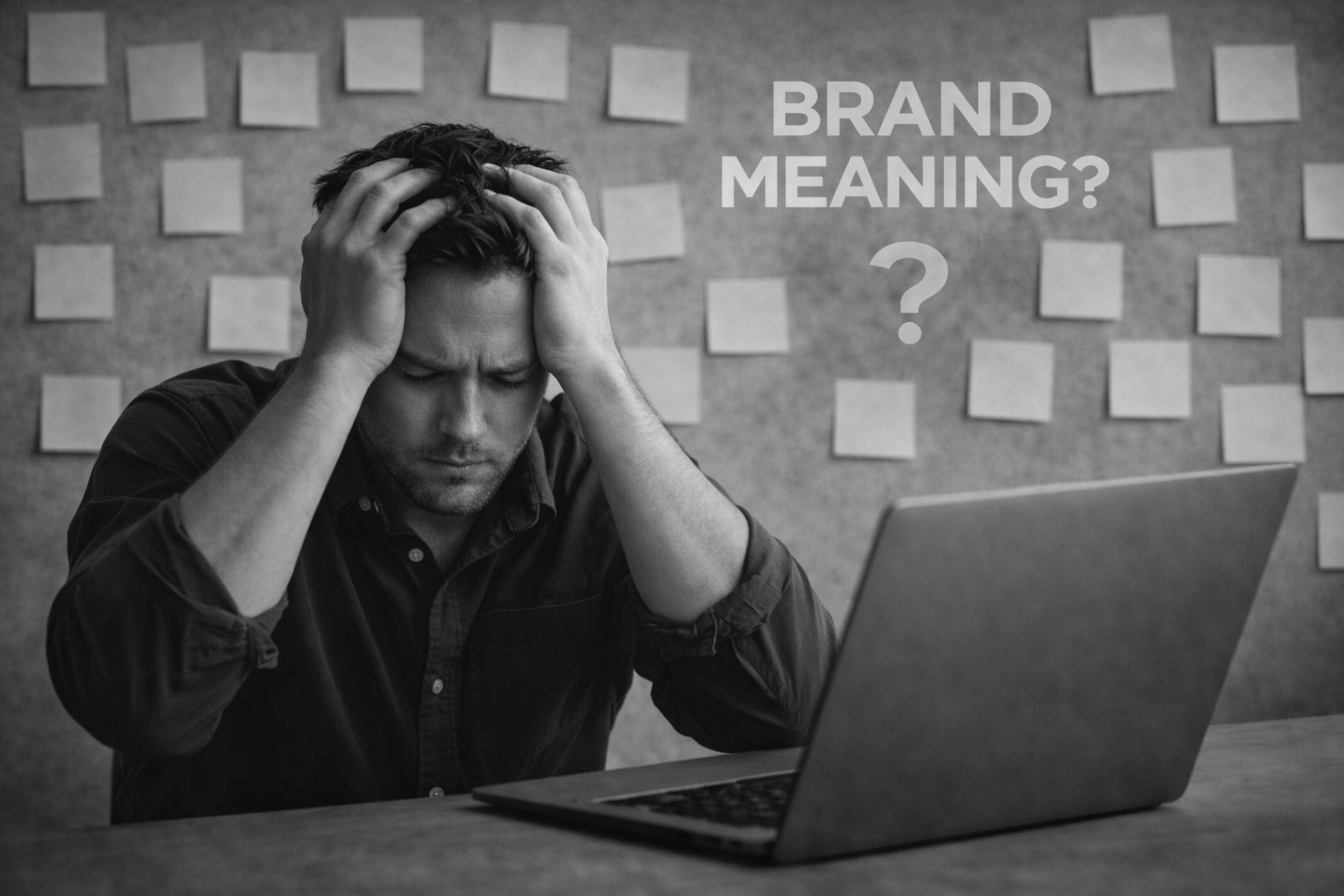
#002. Why Most Ecommerce Stores Feel Invisible – You Don’t Have a Traffic Problem. You Have a Meaning Problem.
Hi, it’s Becky.
If you’ve ever opened your analytics, seen the traffic coming in, and felt that sinking frustration — “People are landing here… so why isn’t this clicking?” — this one is for you.
Because when something doesn’t convert, the default assumption is always the same: more traffic, better ads, a different platform. But most of the time, traffic isn’t the real issue.
Invisibility is.
What invisibility actually feels like
Invisibility doesn’t mean no one sees you. It means they see you… and nothing sticks.
They don’t remember you. They don’t feel pulled toward you. They don’t know why your store exists instead of the next one.
So they browse. They hesitate. They leave.
And when that keeps happening, it slowly erodes your confidence. You start tweaking instead of building. Testing instead of committing. Second‑guessing instead of refining.
I know that feeling intimately.
The moment I realised I wasn’t invisible — my store was
There was a period where I kept refreshing my analytics like it was a slot machine. Traffic was coming in. Sessions looked healthy. Everything “should” have been working.
But nothing was converting.
And I remember sitting there one afternoon, staring at the numbers, feeling that familiar tightness in my chest — the mix of frustration, embarrassment, and “What am I missing?”
My first instinct was the same as everyone’s: I need more traffic. I need better ads. I need to push harder.
But then I had a moment of brutal clarity:
“If people are already here… and they’re still not choosing me… then traffic isn’t the problem.”
That realisation was both painful and liberating.
Because it meant the issue wasn’t volume. It was meaning.
My store didn’t stand for anything clear. It didn’t give anyone a reason to choose it. It didn’t feel like something — it felt like anything.
And “anything” is forgettable.
That was the turning point.
Why more traffic doesn’t fix meaning
Here’s the uncomfortable truth: If your store doesn’t stand for something, more traffic just means more people not choosing you.
That’s not a traffic problem. That’s a meaning problem.
When everything online looks broadly similar — same product angles, same copy patterns, same promises — the customer has no reason to anchor to you.
So they default to:
- price
- convenience
- whatever feels least risky
And that’s a brutal place to compete as a solopreneur.
The shift most founders never make
A product mindset asks: How do I get this product to sell?
A brand mindset asks: Why would someone remember this — and come back?
It sounds subtle. It isn’t.
Because once you ask the second question, everything changes.
You stop trying to please everyone. You stop adding products “just in case.” You stop chasing trends that don’t belong to you.
And suddenly, the store starts to feel… intentional.
What brand actually does (without the fluff)
Brand isn’t about visuals. It’s about:
- clarity
- coherence
- emotional logic
It answers, instantly, in the customer’s mind:
- Is this for me?
- Why does this exist?
- What’s in it for me?
- Why should I trust this?
When those answers are clear, conversion feels natural. When they aren’t, no amount of optimisation fixes the hesitation.
Why AI has made this more obvious
Right now, sameness is accelerating.
AI can write decent product copy in seconds. Templates can produce competent stores overnight. “Proven” ideas are copied faster than ever.
The bar for being acceptable is low. The bar for being memorable is much higher.
And memorability is the only thing that compounds.
Where founders usually go wrong
When things feel unclear, most founders try to add more:
More products. More pages. More offers.
But clarity rarely comes from addition. It comes from subtraction.
From deciding what doesn’t belong. From committing to a point of view. From letting the brand do the filtering — for you and for the customer.
How the Minimum Viable Boutique™ fits here
This is exactly why the Minimum Viable Boutique™ matters.
It gives you a way to test meaning before scale.
Instead of asking: “Will this product sell?”
You’re asking: “Does this brand idea create recognition, trust, and preference?”
You’re not trying to win attention from everyone. You’re learning whether the right people lean in.
That’s a very different kind of signal.
What to look for instead of raw sales
Yes, sales matter. But early on, look for:
- Do visitors understand what you stand for quickly?
- Can they describe the brand back to you accurately?
- Do they respond to the story, not just the price?
Those are signs of meaning taking root. And meaning is what turns a store into a brand.
Why this feels calmer than chasing traffic
When meaning is clear, you stop flailing.
You know what to refine. You know what to ignore. You know what belongs — and what doesn’t.
That steadiness isn’t accidental. It’s the result of building with a Brand Mindset instead of reacting with a Product‑First Mindset.
If you’ve felt invisible, this is why
If you’ve been working hard and still feel unseen, it’s not because you’re bad at ecommerce.
It’s because you were taught to prioritise motion over meaning.
Traffic over clarity. Tactics over identity.
Once you see that, the solution becomes obvious.
Where we’re going next…
In the next newsletter, we’ll ground this even further.
We’ll look at why a calm, numbers‑first foundation is what actually protects creativity — and why the Minimum Viable Boutique™ must start with structure, not hyped‑up inspiration.
Until next week…
Becky
You Might Also Like These: